
In the ZELOCIN™ Tariff Playbook, we explored how smart pricing, proactive cost strategies, and customer-centric approaches, when executed effectively, can drive growth and help offset the resulting higher prices from tariffs.
This article continues the conversation with five frontline-driven strategies designed to accelerate loyalty, increase retention and revenue, and reduce future costs by turning service recovery into a competitive advantage and a strategic lever for growth.
As tariff-driven uncertainty reshapes markets, the brands that come out on top when faced with inflationary pressures are those that plan, develop, and execute strategies that deepen customer relationships to drive increases in Customer Lifetime Value. Pricing and cost strategies build the foundation, but the next step comes from the moments that matter most: how you recover when something goes wrong.
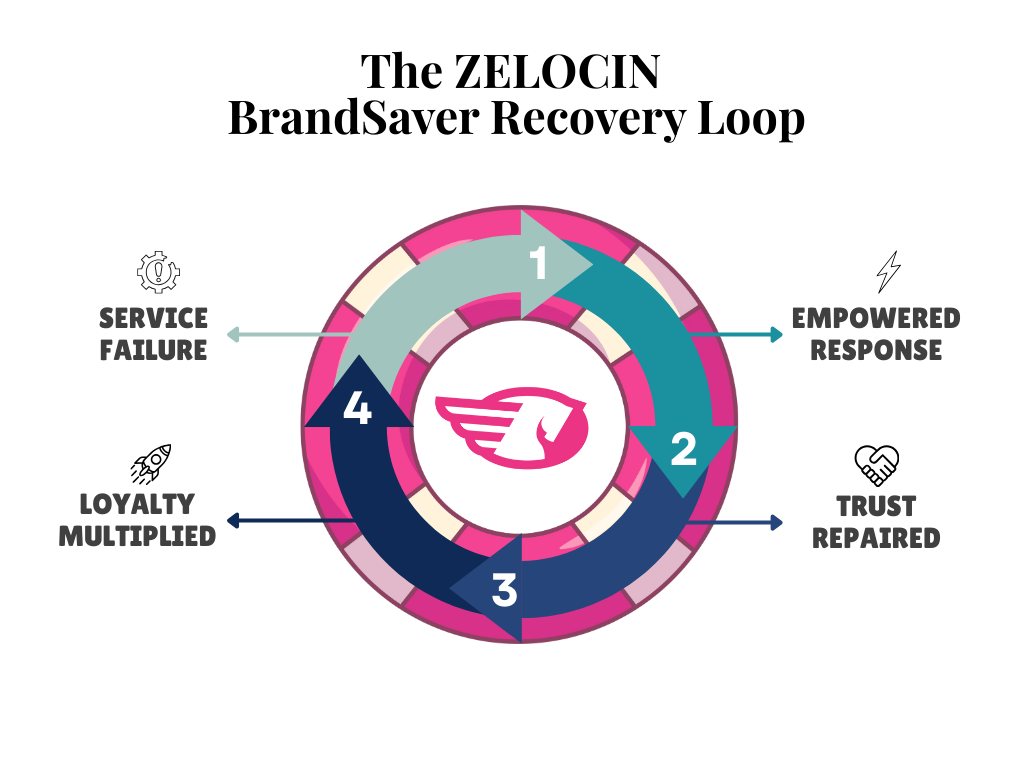
Handled right, recovering from mistakes becomes proof points for your brand values. They become moments where customer trust is repaired, additional value is added, and customer relationships are made stronger. If your service recovery is slow, robotic, or dismissive, your competition smells it. But a quick, human, trust-building response? That’s how you transform missteps into customer loyalty and profitable growth.
🔹 Enable Empathy to Drive Loyalty
🎯 Why it works: Empathetic service strengthens emotional bonds with customers, making them more likely to stay loyal, purchase more frequently, and recommend your brand to others. Additionally, customers who feel understood and valued are less price-sensitive and more willing to deepen their relationship with your brand, fueling both retention and organic growth.
🛠️ How to implement it:
- Encourage teams to see situations from the customer’s perspective with roleplay and scenario training.
- Create a customer-centric culture over a product-centered approach.
- Include empathy-building exercises in employee onboarding and ongoing training.
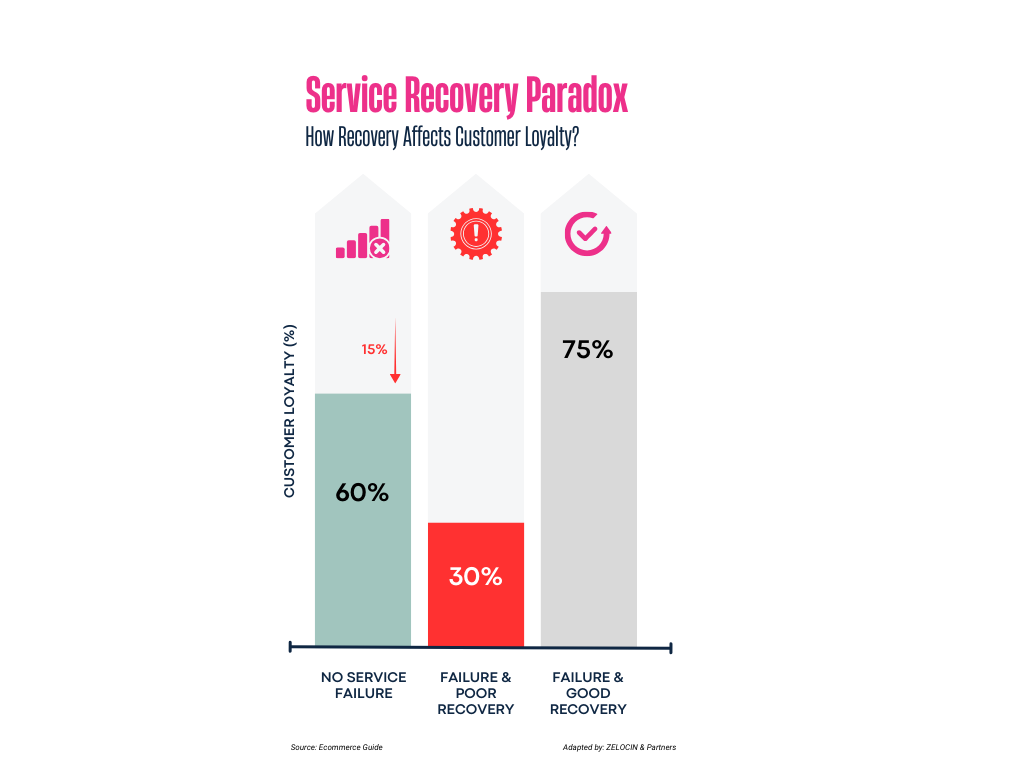
ZELOCIN Insight: Word of Mouth marketing is one of the most powerful channels of promotion, and it’s practically free! Customers who develop positive emotional connections with brands are significantly more likely to recommend your brand to others. According to the HBR article, The Profitable Art of Service Recovery, “Customers who experience a positive service recovery are more loyal than those who never had a problem in the first place”, highlighting the power of service grounded in empathy.
Empathy in Action: Chewy
Chewy, the leading online pet product retailer, built loyalty not through discounts but through deep empathy. When customers lose a pet, Chewy goes above and beyond to empathize. The brand often sends handwritten condolence cards, flowers, or offers refunds without being asked. These gestures aren’t scripted; they come from a culture that puts compassion first. That human-first approach fuels viral word-of-mouth, high retention, and an NPS that rivals top luxury brands. In moments of vulnerability, Chewy shows up not to sell but to support. And that’s what customers never forget.
🔹 Equip the Frontline to Own the Moment
🎯 Why it works: Empowered employees create faster more personalized recovery experiences that surprise and delight customers. These standout moments turn a negative into a loyalty accelerator, leading to higher satisfaction scores, more referrals, and increased lifetime value across your customer base.
🛠️ How to implement it:
- Give reps decision-making authority within clear guardrails.
- Share success stories that highlight frontline autonomy paying off.
ZELOCIN Insight: Customers don’t remember the script; they remember the human. When employees are empowered to act with speed and empathy, recovery becomes a moment of differentiation, not just damage control. Research shows that frontline autonomy can increase first-contact resolution by up to 25%, and customers who experience empowered service are 2x more likely to stay loyal after a service failure.
Owning the Moment in Action: Ritz-Carlton Hotels
The world-class Ritz-Carlton, renowned for its exceptional customer service and hospitality, has implemented a unique strategy to empower employees and foster fierce customer loyalty. Its guiding policy, known as the “$2,000 rule” allows any employee to spend up to $2,000 to resolve a guest’s issue without needing managerial approval. This approach not only reinforces Ritz-Carlton’s commitment to employee empowerment but also strategically enhances customer lifetime value. While $2,000 per customer might seem like a significant cost, it’s a smart investment compared to the average $250,000 lifetime value of a Ritz-Carlton guest, making it a deliberate move to boost retention and loyalty.
🔹 Prioritize Trust to Scale Loyalty
🎯 Why it works: Consistency and transparency build customer trust, which directly translates to higher retention rates, reduced churn, and stronger pricing power. Brands that consistently deliver and communicate well are positioned as reliable partners, leading customers to invest more over time and advocate for your brand.
🛠️ How to implement it:
- Prioritize recovery workflows, tone, and frontline empowerment to deliver seamless, trust-building experiences from the very first interaction.
- Use post-resolution follow-ups that clearly explain what went wrong, how it was fixed, and what steps are being taken to prevent the issue from happening again in the future.
ZELOCIN Insight: Brands that consistently communicate and resolve issues using standardized recovery practices see up to 38% higher customer retention and 2x greater likelihood of positive word-of-mouth. When customers know what to expect, even during failure, they stay loyal, spend more, and become advocates for your brand.
🔹 Invest in the Employee Experience to Elevate the Customer Experience
🎯 Why it works: Engaged employees create better customer experiences, leading directly to higher customer loyalty, increased wallet size, and stronger brand reputation. When employees are equipped and motivated to deliver exceptional service, they become growth accelerators, transforming everyday interactions into long-term customer value.
🛠️ How to implement it:
- Provide tools, training, and recognition that reinforce service excellence.
- Collect employee feedback on service pain points and fix internal friction.
ZELOCIN Insight: Happy teams create loyal customers. When employees feel supported, trusted, and valued, it shows up in every customer interaction. Brands that prioritize employee experience see up to 81% higher customer satisfaction and 50% more repeat purchases. Great service starts within. When your people are set up to succeed, your customers feel the difference.
Service to Elevate Customer Experience in Action: Southwest Airlines
Southwest Airlines proves that great customer experience starts within. By prioritizing trust, autonomy, and a culture that encourages heart-led service, Southwest’s employee-first model powers exceptional customer-first interactions. As a result, the company has seen low turnover, high employee morale, and customers who stay loyal even when things go wrong.
Translation? Invest in your frontline to accelerate top-line growth.
🌱 Ready to build growth through service recovery? Start by enabling and empowering your people to act with empathy, speed, and purpose.
Trust to Scale Loyalty in Action: Amazon
When delays happen, Amazon doesn’t wait for complaints; it notifies customers early with clear updates and revised delivery dates. Seamless escalation paths and post-delivery follow-ups explain what went wrong, how it was resolved, and what’s being done to prevent it. These actions build trust between the customer and the brand because they feel informed, respected, and supported.
🔹 Reinforce Your Brand Promise Through Recovery
🎯 Why it works: Moments of failure are moments of proof. When a brand makes a mistake, falls short of meeting customer expectations, or fails to deliver, how it recovers and makes things right for the customer ultimately measures the quality and longevity of its success. When you recover in a way that reflects your brand promise, you earn deeper emotional loyalty and brand strength. Customers who see your values in action after a mistake are more likely to stay, spend more, and positively voice your brand publicly, turning service recovery into momentum for growth and market dominance in an ocean full of hungry competitors.
🛠️ How to implement it:
- Ensure recovery aligns with your broader customer promise.
- Build processes and equip employees with all the right tools and resources to make decisions rooted in brand mission and service values.
ZELOCIN Insight: In the shark tank of customer expectations, recovery is where your brand promise gets tested. The brands that stay true to their values when things go wrong are the ones that customers remember and talk about. Companies that lead with purpose in moments of failure see up to 3 times more advocacy and a 23% increase in long-term brand preference.
Brand Promise Through Recovery in Action: Lexus Cars
Lexus did not just fix problems; they prevented them. From the beginning, Lexus service representatives went beyond the basics by offering complimentary loaners for even minor maintenance like oil changes. This proactive, guest-first mindset created unexpected delight, and customers remembered. Word-of-mouth surged. And soon, competitors like Audi, BMW, and Mercedes-Benz had to elevate their own service standards to stay relevant. Lexus proved that how you serve during the small moments defines how customers see you in the big ones.