
The Market Reality in 2026
The numbers are no longer projections. They are here.
The Federal Reserve estimates that 2025 tariffs raised core goods prices by 3.1% through February 2026. Goldman Sachs puts US consumers absorbing 55% of tariff costs by end of 2025 — up from 37% earlier in the year. Harvard Business School research tracking 350,000 goods found imported items running 5% more expensive since March 2025, with domestic goods up 2.5% in the same period.
Every sector touching imports or exports is feeling it. Margins are under pressure. Supply chains are being renegotiated.
The numbers are no longer projections. They are here.
The Federal Reserve estimates that 2025 tariffs raised core goods prices by 3.1% through February 2026. Goldman Sachs puts US consumers absorbing 55% of tariff costs by end of 2025 — up from 37% earlier in the year. Harvard Business School research tracking 350,000 goods found imported items running 5% more expensive since March 2025, with domestic goods up 2.5% in the same period.
Every sector touching imports or exports is feeling it. Margins are under pressure. Supply chains are being renegotiated.
In a market where every competitor’s costs are rising simultaneously, competing on price is a race that nobody wins.
One policy change. Margins squeezed, supply chains disrupted, pricing decisions forced across every sector touching imports or exports. The instinct is to react — absorb the cost, pass it on, or find the most efficient tariff workaround. We understand the instinct. It’s also how you give up the only competitive advantage that actually lasts.
Hermann Simon, whose foundational work on pricing shapes how we think about value at ZELOCIN™ & Partners, stated it plainly: price is not a mere figure. It is a reflection of perceived value. The businesses with genuine competitive advantage in a tariff environment are the ones whose customers understand and believe in the value they receive — clearly enough that a price adjustment feels proportionate rather than punitive. That belief is built long before the invoice arrives.
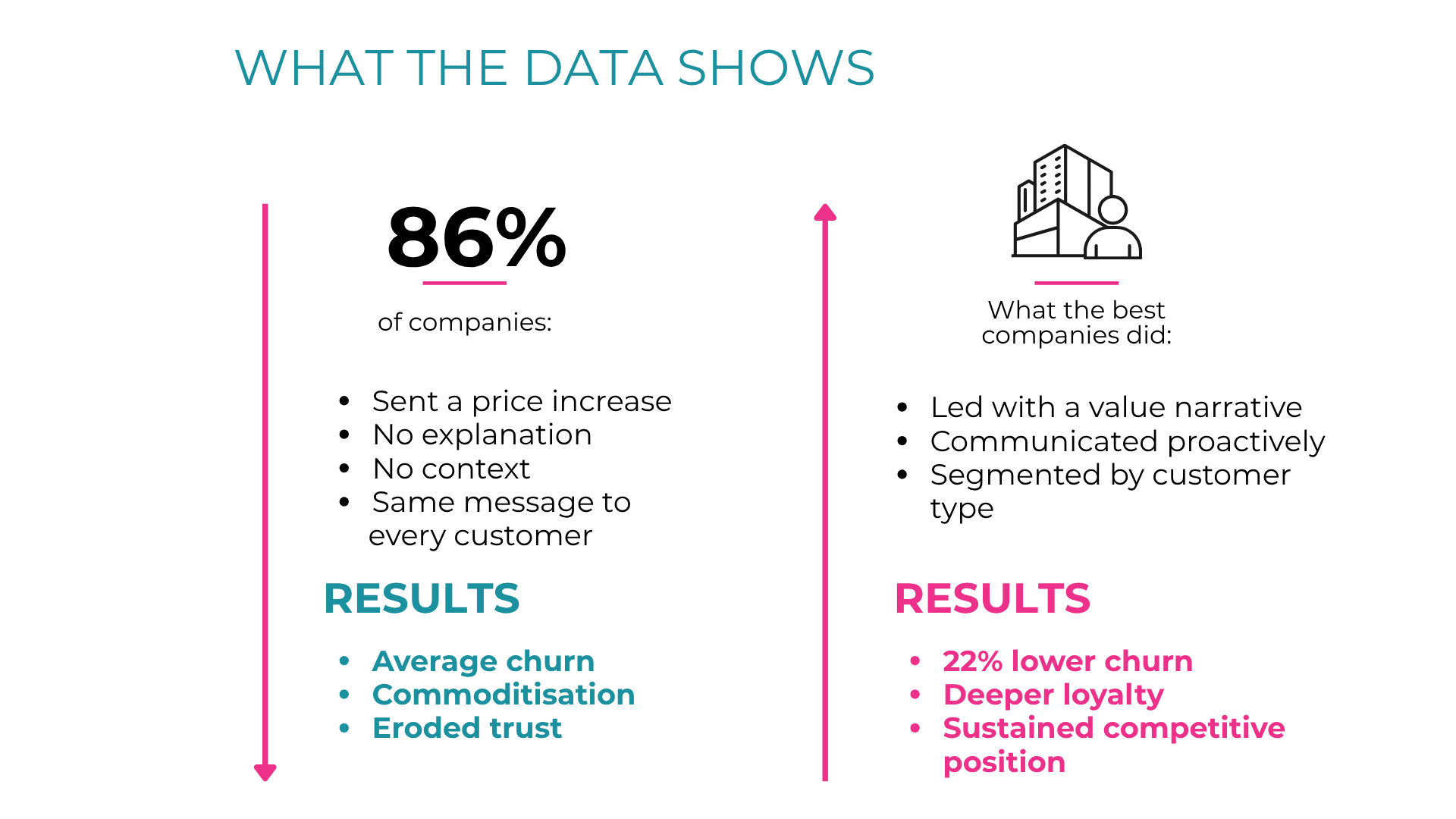
54% of companies passed the full tariff cost to customers — no explanation, no context, no narrative. Harvard Business School research confirms this is the default response. It is also the costliest one.
This is the Price Trap. Not the tariff itself. Not the cost increase. The decision to let the number do the work that a relationship and a story should be doing.
THE GABO 2026 DATA
The 2026 German American Business Outlook surveyed 243 companies. 86% predicted growth going into 2025. 64% achieved it. 23% declined.
That gap is not explained by tariff exposure. Both the companies that succeeded and those that fell behind faced identical conditions. The difference was the decision to build rather than react.
In the Market — What Getting It Right Looks Like
A German manufacturer competing in the US premium appliance market chose a different path. While the majority of comparable companies were reacting to cost pressure, passing it on or absorbing it without a strategy, this business invested systematically across five growth levers.
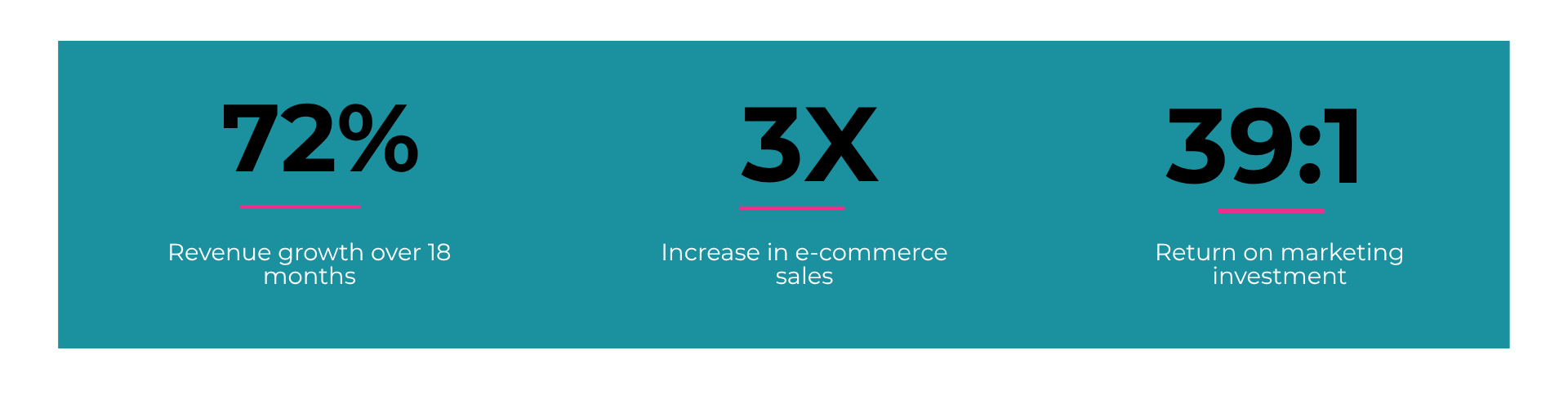
Revenue grew by 72% over 18 months. E-commerce sales increased more than threefold. The marketing investment generated a 39:1 return.
The gap between that outcome and the market average is not explained by tariff exposure. Both faced identical conditions. The difference was the decision to build rather than react.
ZELOCIN™ INSIGHT
Stop reacting to tariff pressure and start building toward your competitive advantage. At ZELOCIN™ & Partners we see this consistently: the companies that treat disruption as a diagnostic — asking where the gaps are, which levers to pull, in what sequence — come out of the volatility ahead. The ones that simply pass on costs and wait for stability fall behind.
The Growth Clinic Diagnostic
The ZELOCIN™ Growth Clinic Diagnostic — included in the Playbook 2.0 on pages 15-16 — works through each of the five growth levers with your leadership team.
If any of the questions in Part One raised something worth examining in your own business, the diagnostic is where the work starts. Five levers. Two questions each. The gaps are where your competitors will find you if you don’t find them first.
Part Two of the Playbook — The Five Levers — addresses each one in full. Part Three — The Communication Imperative — covers the three principles that separate the companies building competitive advantage from the ones watching it erode.
The Strategic Window Is Still Open
The tariff environment will keep shifting. The Section 122 window runs until July 24, 2026. The legal address of the uncertainty has changed. The pressure on margins has not.
The companies that win through this period will not be the ones that found the most elegant tariff workaround. They will be the ones whose customers already knew why they were worth it before the conversation started.
The ZELOCIN™ Growth Clinic Playbook 2.0 — When Everyone Raises Prices, How Do You Win? — builds the five-lever framework for becoming one of those companies. Download it at zelocin.com.
If any of this raised something worth examining in your own business, reach out. We will arrange a complimentary Growth Clinic diagnostic session — a real strategic conversation about where your growth is and what is holding it back.
Nicole Zimmermann builds growth strategies that stick. Founder of ZELOCIN™ & Partners and architect of the Growth Clinic framework, she works on both sides of the US market equation — helping international companies land and grow, and US companies differentiate and win. She mentors international companies through the Global Landing Pad program of Denver Economic Development and Opportunity and speaks at Money 20/20 on brand differentiation and value-led growth.
© 2026 ZELOCIN™ & Partners LLC • zelocin.com • info@zelocin.com